


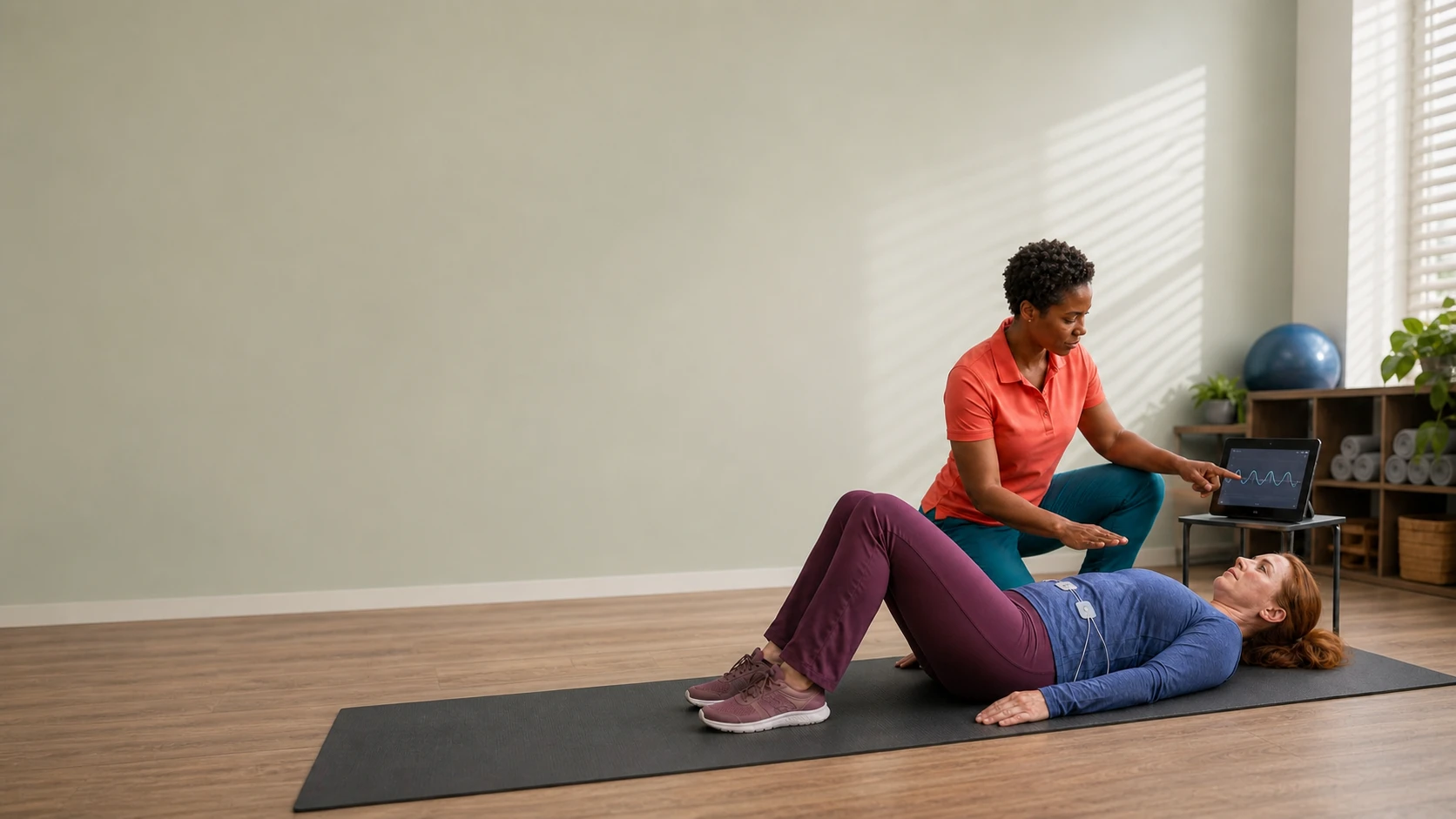
The pelvic floor can be weak, overactive, poorly coordinated or injured
Pelvic-floor dysfunction includes urinary leakage, urgency, difficulty emptying the bladder, bowel leakage or obstructed defecation, pelvic-organ prolapse, sexual dysfunction and chronic pelvic pain. NICE defines the pelvic floor as muscles working around the bladder, anal canal and vagina. [1] A symptom can result from reduced support, excessive muscle tone, impaired relaxation, nerve injury or several mechanisms together.
This is why repeated squeezing is not a universal answer. A person with stress incontinence may need strength and endurance, while someone with pain or obstructed emptying may first need relaxation and coordination. A clinician or pelvic-health physiotherapist should identify the functional problem before prescribing a program.
- Stress leakage occurs with cough, exercise or impact.
- Urgency leakage follows a sudden compelling urge.
- Prolapse may cause pressure, bulge or emptying symptoms.
- High muscle tone may contribute to pain and difficult penetration.
Assessment should map every relevant system
History should cover bladder, bowel, prolapse, pain and sexual symptoms, childbirth, surgery, neurological disease, diabetes, constipation, medications, fluid intake and daily impact. A bladder or bowel diary can clarify triggers and frequency. Examination is individualized and may assess prolapse, muscle contraction, relaxation, tenderness and ability to empty the bladder. [5]
Red flags include blood in urine or stool, unexplained weight loss, recurrent infection, new neurological symptoms, pelvic mass, fistula symptoms, severe retention and postmenopausal bleeding. These require appropriate investigation rather than rehabilitation alone. A normal-looking pelvis does not exclude a functional muscle or nerve problem.
- Describe leakage triggers and urgency separately.
- Record constipation, straining and bowel leakage.
- Ask about pain and sexual function with consent.
- Measure what the person wants to regain.
Supervised muscle training is evidence based when matched to the problem
NICE recommends at least three months of supervised pelvic-floor muscle training as first-line care for stress or mixed urinary incontinence. [2] A Cochrane review of 31 trials involving 1,817 women found that training improved cure or improvement compared with no or inactive treatment, with mostly moderate-certainty evidence. [4] Long-term adherence and effectiveness remain less certain.
Supervision should confirm that the person can both contract and relax the correct muscles, then tailor strength, endurance, speed and functional practice. Biofeedback or electrical stimulation can help selected people who cannot generate an effective contraction, but NICE does not recommend routine device use for everyone. [6]
- Verify technique before increasing repetitions.
- Include full relaxation between contractions.
- Practice around real triggers such as cough or lifting.
- Review progress during and after the program.
Pregnancy and postpartum care should prevent silence, not promise prevention
Pregnancy, vaginal birth, operative birth and obstetric anal-sphincter injury can increase pelvic-floor risk, but symptoms also occur without childbirth and are not a moral consequence of delivery choices. NICE encourages pelvic-floor muscle training during and after pregnancy and considers supervised programs for selected higher-risk groups. [1]
Postpartum review should ask directly about urinary and bowel leakage, bulge, pain, sexual function and return to activity. Recovery varies, and an early symptom does not always become permanent. Persistent or severe symptoms deserve assessment rather than advice to wait indefinitely. Feeding position, lifting, constipation and sleep can all affect a feasible rehabilitation plan.
- Ask about bowel as well as bladder symptoms.
- Screen after operative birth or sphincter injury.
- Progress return to impact according to symptoms and function.
- Offer referral when symptoms limit daily life.
Bladder, bowel, prolapse and sexual care can be combined
Bladder training is first-line care for urgency or mixed incontinence, while constipation treatment, stool consistency and toileting mechanics can improve bowel and pressure symptoms. [2] A pessary can support symptomatic prolapse, with fitting, maintenance and sexual-activity considerations discussed. Surgery is an option for selected incontinence or prolapse, not a requirement for every anatomical change.
Painful sex may reflect tissue changes, pelvic-floor overactivity, vulvodynia, scars or fear after painful experiences. Treatment can combine down-training, manual therapy, graded exposure, lubrication or vaginal-estrogen care when indicated, and psychosexual support. Calling all pelvic-floor care strengthening can worsen guarding and misses the person's actual goal.
- Match bladder training to urgency symptoms.
- Treat constipation and stool consistency.
- Discuss pessary care and effect on sex.
- Use relaxation-focused therapy for high-tone pain.
Technology should support skilled care, not imitate it
Apps, intravaginal sensors and connected trainers may support reminders or feedback, but a device cannot by itself determine whether muscles are weak, overactive or poorly coordinated. NICE advises against routine perineometry or electromyography biofeedback for all women and reserves adjunctive technology for specific needs. [6]
A useful digital program states its target condition, validates measurements, protects intimate data and provides a route to clinical review. Outcomes should include leakage, emptying, pain, function and quality of life, not contraction score alone. Sophisticated pelvic care is personalized anatomy, physiology and behavior, with technology used only when it improves that pathway.
- Confirm what the sensor actually measures.
- Do not chase contraction strength when relaxation is impaired.
- Review privacy for intimate-device data.
- Stop or adapt a program that increases pain or emptying problems.
What the evidence cannot yet answer
- Prevalence varies greatly by symptom definition, age, sampling and whether examination or self-report is used.
- Pelvic-floor muscle training trials are stronger for urinary incontinence than for some pain and prolapse outcomes.
- Long-term adherence and comparative effectiveness among digital devices are incompletely studied.
- Anatomical prolapse stage and symptom burden do not always correlate.
Questions worth taking into care
- Is my pelvic floor weak, overactive, poorly coordinated or affected in several ways?
- Have bladder, bowel, prolapse, pain and sexual symptoms all been assessed?
- What is the goal and duration of supervised therapy?
- Would a pessary, bladder training or another treatment add value?
- What change should trigger imaging, specialist referral or surgery discussion?
Source record
Evidence used in this review
Sources were selected for clinical authority, methodological relevance and traceability. Links open the original guidance, public-health record or research publication.
- [1]Pelvic Floor Dysfunction: Prevention and Non-Surgical Management
National Institute for Health and Care Excellence · 2021
- [2]Urinary Incontinence and Pelvic Organ Prolapse in Women
National Institute for Health and Care Excellence · 2019
- [3]Pelvic Floor Disorders Research Overview
National Institutes of Health · 2026
- [4]
- [5]Urinary Incontinence
American College of Obstetricians and Gynecologists · 2022
- [6]Pelvic Floor Dysfunction: Prevalence and Associated Factors
BMC Public Health · 2023
This evidence synthesis is for general information. It does not diagnose a condition or replace care from a qualified health professional. Treatment choices depend on individual history, examination, local guidance and informed preference. Emergency or rapidly worsening symptoms need urgent local medical assessment.